San Francisco Expands Paid Parental Leave: What Employers and Employees Need to Know About the 2026 PPLO Update
August, 2026, San Francisco Mayor Daniel Lurie enacted Ordinance 162-26, introducing a pivotal amendment to the city’s Paid Parental Leave Ordinance (SF PPLO). The legislation cuts in half the service threshold required for an employee to receive employer-mandated supplemental leave pay (top-up pay) during child-bonding leave from 180 calendar days down to 90 calendar days.
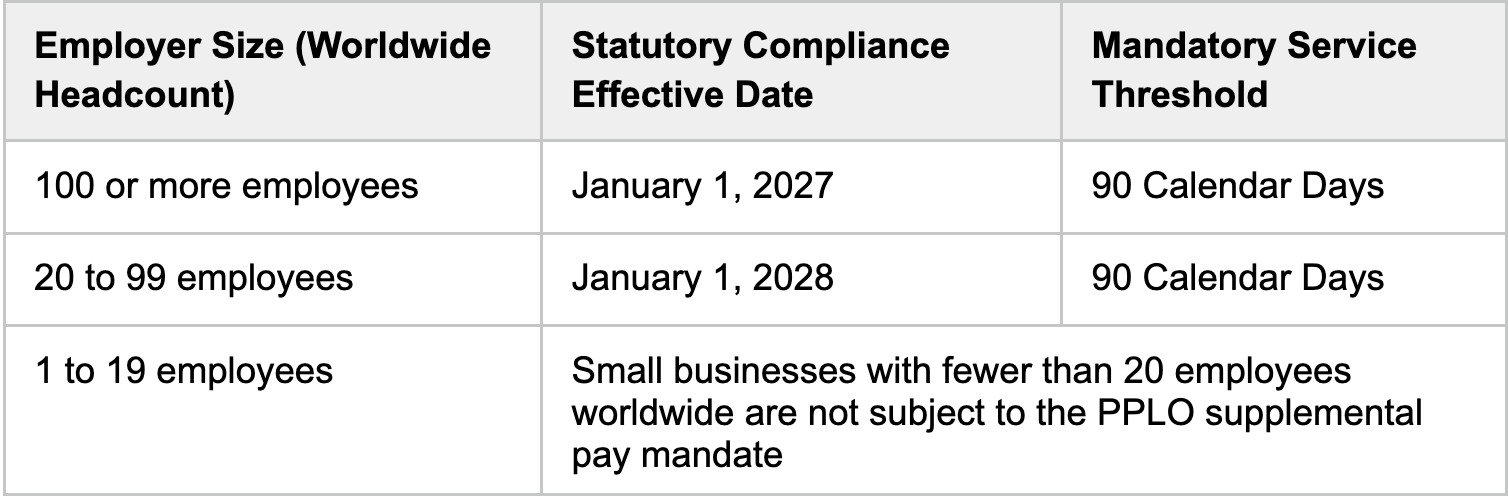
This policy aligns the PPLO’s tenure waiting period with San Francisco’s Paid Sick Leave Ordinance (PSLO). While the legislation formally enters the municipal charter 31 days post-enactment, the compliance mandates follow a phased, multi-year rollout tier based on global employer headcount.
Whether you manage workforce compliance or are planning to welcome a new child, here is a detailed breakdown of what this expanded policy means for you.
Phased Implementation Schedule
To mitigate sudden operational friction for smaller enterprises, the Board of Supervisors structured compliance enforcement based on global employer size:
What Employers Need to Know
Organizations operating within San Francisco should evaluate their current leave structures, workforce planning models, and payroll integration systems to prepare for phased enforcement starting January 1, 2027.
Under the SF PPLO, covered private-sector employers must pay "supplemental compensation" to bridge the gap between California Paid Family Leave (CA PFL) wage replacement (typically 60%–70% of regular earnings) and 100% of the employee’s regular gross weekly salary, up to the city's annual benefit cap (San Francisco’s PPLO maximum weekly benefit cap is indexed annually based on the State Average Weekly Wage (SAWW) calculation published by the California Employment Development Department (EDD)).
Multi-Jurisdictional & Hybrid Work Tracking
To be considered a "covered employee," a worker must satisfy all remaining criteria under the ordinance, which remain unchanged:
Perform at least 8 hours of work per week within San Francisco geographic limits.
Perform at least 40% of their total weekly hours within San Francisco, calculated using a 4-week lookback period prior to the start of the leave period.
Qualify for and receive CA PFL child-bonding benefits from the EDD
Administrative Guidance & Payroll Integration
Notice Postings: Employers must monitor the San Francisco Office of Labor Standards Enforcement (OLSE) portal to download updated official multilingual PPLO notices and revised Employee Form documentation prior to the January 1, 2027 effective date.
Financial Planning: Because broad employee eligibility begins three months earlier, finance and HR departments should re-evaluate projected leave compensation liabilities, particularly in high-growth or high-turnover environments.
Policy & Handbook Revisions: Handbooks, offer letters, leaves-of-absence policies, and intranet portals must be updated immediately to reflect the 90-day service requirement.
What Employees Should Know
If you are expanding your family, whether through birth, adoption, or foster placement, this policy change provides financial security much earlier in your tenure with a new employer.
Key Benefits for Working Parents
Faster Access to Full Pay: You no longer have to wait half a year at a new job to receive supplemental parental leave pay. As long as you have been with your employer for 90 days, you can receive full wage replacement for up to 8 weeks while bonding with your child.
How Wage Topping Works: California’s state Paid Family Leave (PFL) program typically covers 60% to 70% of an employee's regular wages. Under SF PPLO, your employer pays the remaining 30% to 40% difference so your total paycheck remains at 100% (up to the city’s yearly cap).
Covers Birth, Adoption, and Foster Placement: PPLO benefits apply equally to biological, adoptive, and foster parents.
Reduced Financial Stress: By closing the gap between starting a new job and receiving paid parental benefits, new parents are less likely to be forced to choose between starting a family and accepting a new career opportunity.